A plain-English guide to Flowmance template licensing: client projects, customization, one-project licenses, plan access, redistribution, ownership, and downloads.
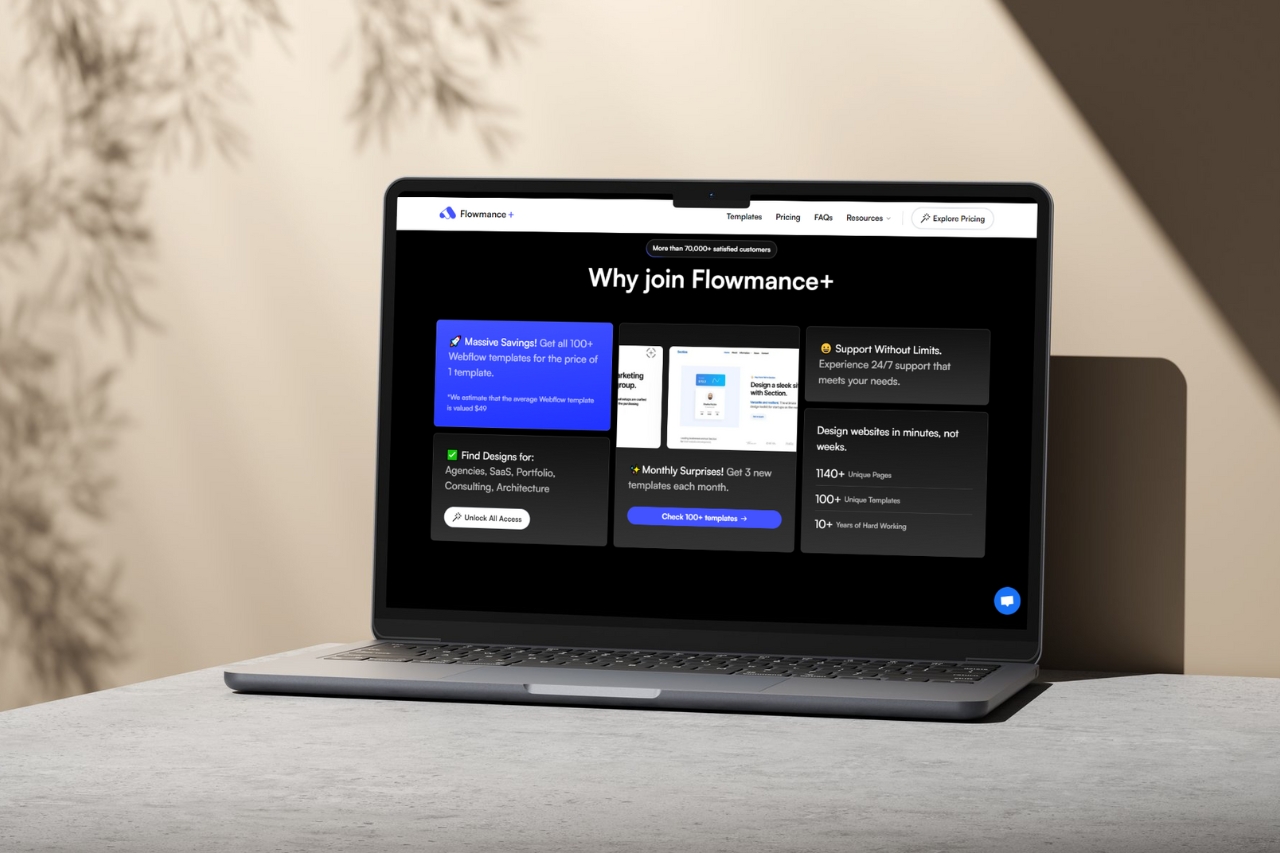
Yes, Flowmance templates can be used for personal and commercial client work. The important distinction is between using a template to build a finished website and redistributing the template itself.
This guide explains the practical side of the license in plain English. For the legal wording, the Flowmance License Agreement and Terms of Service remain the controlling documents.
Yes. Flowmance permits personal and commercial use, including client projects. You can change the copy, colors, typography, images, layout, interactions, CMS structure, and other parts of the template to fit the final website.
That is the intended use: take the template as a starting point and turn it into a finished project.
No. Purchasing or accessing a Flowmance product gives you a non-exclusive, non-transferable license to use it under the applicable terms. The underlying template and Flowmance assets remain Flowmance intellectual property.
You do, of course, own the original client content, brand assets, copy, photography, and other material you or your client add to the finished project, subject to the rights attached to those materials.
The standard Flowmance license allows one end product per license, unless the plan or purchase terms specifically state otherwise.
This matters most for agencies. Reusing the same template as the foundation for several unrelated client websites is not automatically covered by a single standard license. Check the terms attached to the plan you purchased before treating a template as a multi-client asset.
Yes. Customization is allowed. In practice, we recommend changing more than the logo and colors anyway.
A client site usually benefits from its own content hierarchy, typography, image direction, CMS fields, interactions, and section order. The template should disappear into the final work rather than remain visibly identical to the demo.
No. You cannot redistribute, resell, sublicense, share, or make a Flowmance template publicly available as a template or standalone asset, whether it is modified or unmodified.
That includes uploading the source to another template marketplace, giving away the editable template as a free download, or packaging Flowmance assets into a competing template library.
Yes. Building a finished website for a client is commercial use and is allowed under the applicable license.
The restriction is on transferring or redistributing the Flowmance template as a reusable standalone product. A normal client handoff of the completed project is different from reselling the template itself.
No. Attribution is not required under the current Flowmance License Agreement. A credit such as “Designed by Flowmance” is appreciated, but optional.
Access rules depend on the plan. Current Flowmance Terms describe a yearly all-access option that provides access during its active one-year period and a Lifetime option that provides permanent access to included current and future resources.
Because plan names, library size, and commercial offers can change, check the current pricing page before purchasing rather than relying on an old blog post or screenshot.
A plan ending does not turn a completed licensed website into an unlicensed project. The relevant question is whether the project was created and used within the rights granted by the license you had.
Access to future downloads, new resources, or additional projects is a separate issue and depends on the plan terms.
The license is non-transferable. Do not share account access or redistribute source files as a reusable resource to third parties.
If another agency, contractor, or company needs independent rights to reuse the template, they should have the appropriate license of their own.
The same basic licensing principle applies across Flowmance formats: use the resource to create a permitted end product, but do not redistribute the source as a competing template or standalone asset.
Format availability varies by template, so confirm the actual files included on the individual product page or inside the current Flowmance All Access library.
If a project falls outside these common cases, use the License Agreement as the primary reference or contact Flowmance before shipping the project. It is easier to clarify an edge case early than to guess from an old pricing page or article.






Don’t miss out on our superb, customizable templates designed to enhance your web design experience. We constantly add new templates and components.

Explore stunning Webflow, Framer, and Figma templates designed to spark your next big idea.


*Rest assured that your data is safe with us, and you'll only hear from us 1 time per month.